
If you’ve ever searched “water plane” and weren’t entirely sure what you were even looking for, you’re not alone. It’s one of the most common ways people describe an aircraft that takes off and lands on water, more commonly known as a seaplane. If you’ve never seen one in person, or you’re just curious what makes them different from a regular airplane, here’s the beginner’s rundown.
So What Is a Seaplane, Exactly?
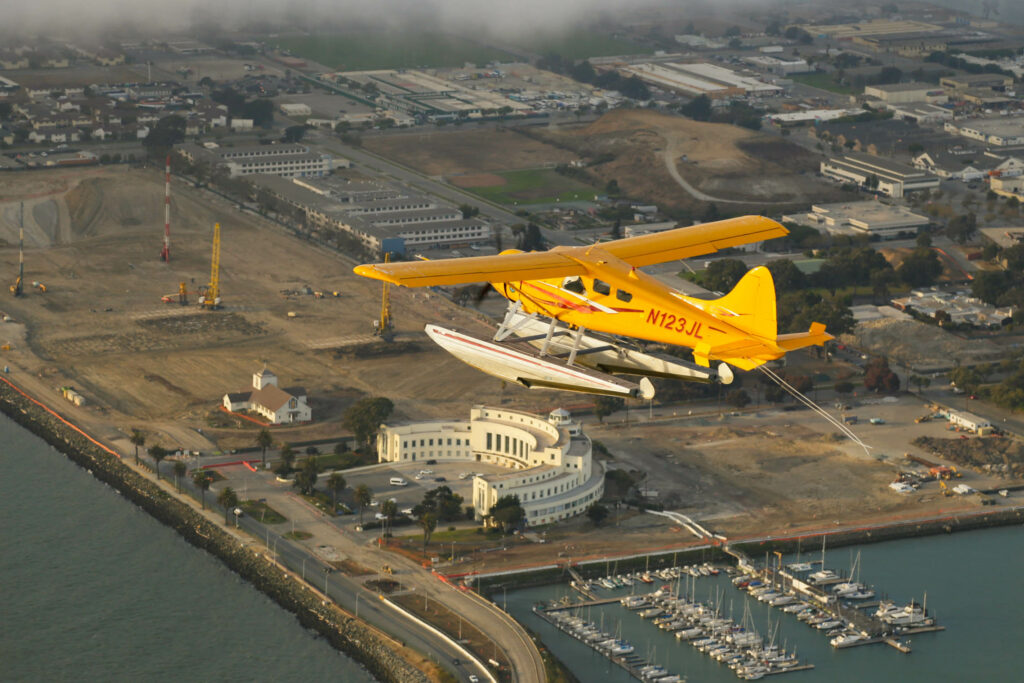
A seaplane is simply an aircraft built to take off and land on water instead of a runway. Instead of wheels, it uses floats or a boat-shaped hull to rest on the surface of the water, glide across it to build speed, and lift off just like any other plane. Landing works the same way in reverse: a smooth splashdown onto the water instead of a runway touchdown.
Floatplane vs. Flying Boat: The Two Types
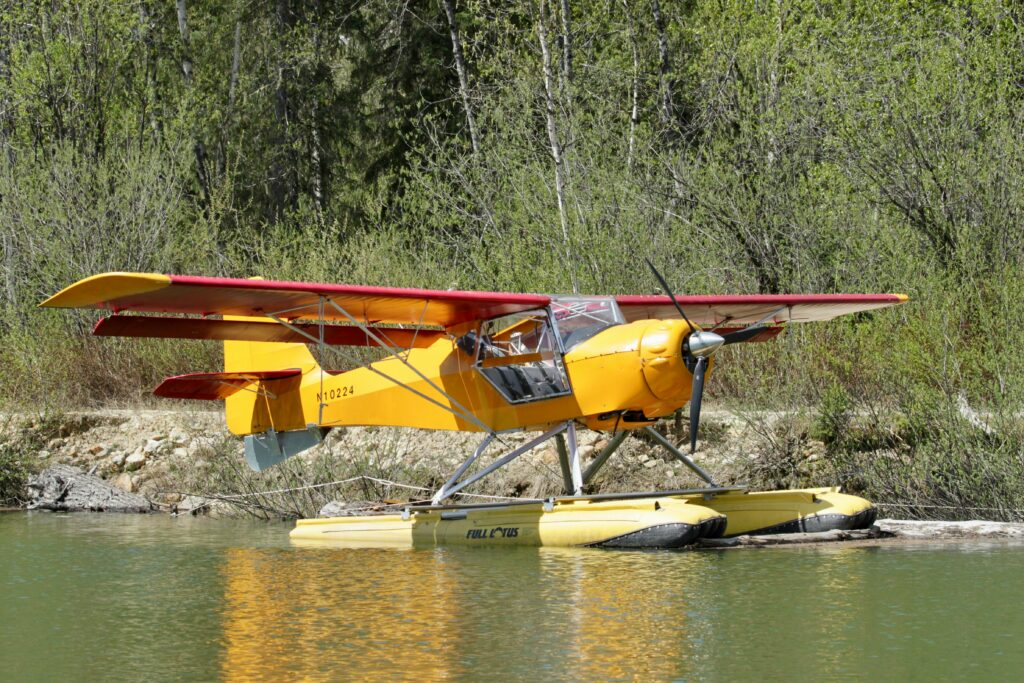
Here’s where it gets genuinely interesting: “seaplane” is actually an umbrella term for two different designs.
A floatplane looks like a regular airplane with two large pontoons, or floats, attached underneath in place of wheels. The fuselage itself stays out of the water; only the floats touch the surface. This is what our own aircraft, the De Havilland Beaver, is: a rugged little plane built specifically to combine a normal airframe with a set of floats.
A flying boat, on the other hand, has a fuselage shaped like a boat hull, so the body of the plane itself sits in the water, sometimes with small stabilizing floats near the wingtips for balance. Classic flying boats like the old PBY Catalina were essentially boats that could also fly. They’re less common today, but floatplanes like ours carry the same basic idea forward.
How Does It Actually Take Off From Water?
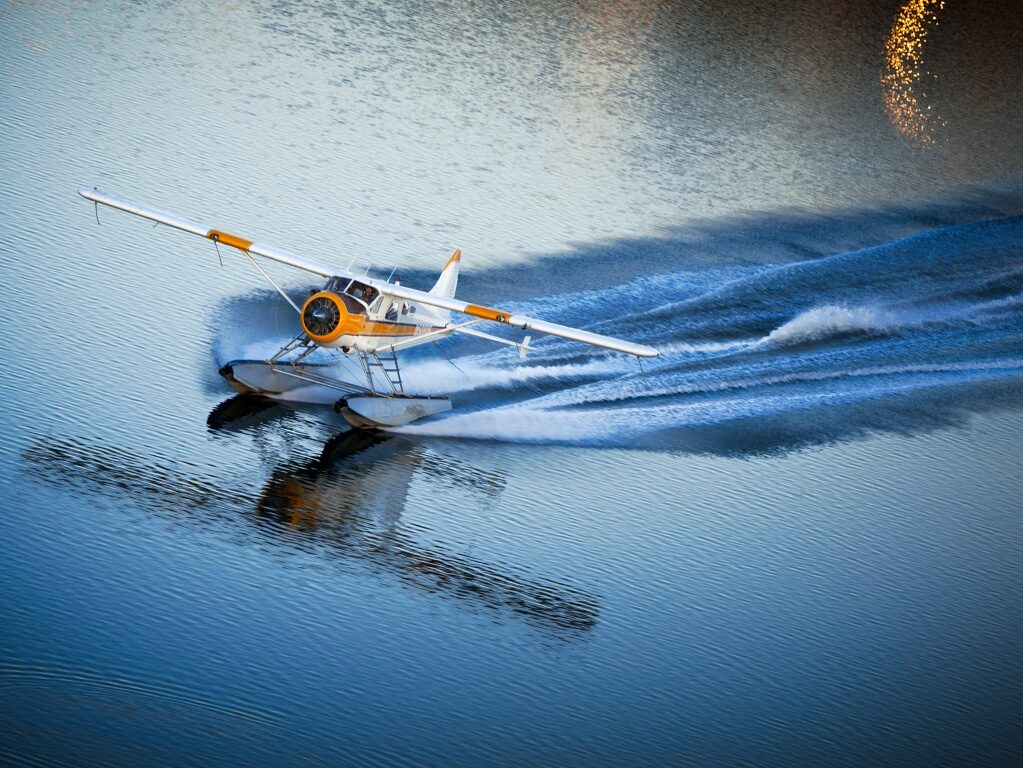
Water creates a lot more drag than a paved runway, so a seaplane has to work harder to build up speed. As the aircraft accelerates across the surface, the floats start to “plane,” rising up and skimming across the top of the water rather than plowing through it, similar to how a speedboat rises up onto a plane at speed. Once it’s going fast enough, the wings generate enough lift to take over entirely, and the plane lifts free of the water.
Why Fly a Seaplane Over San Francisco?
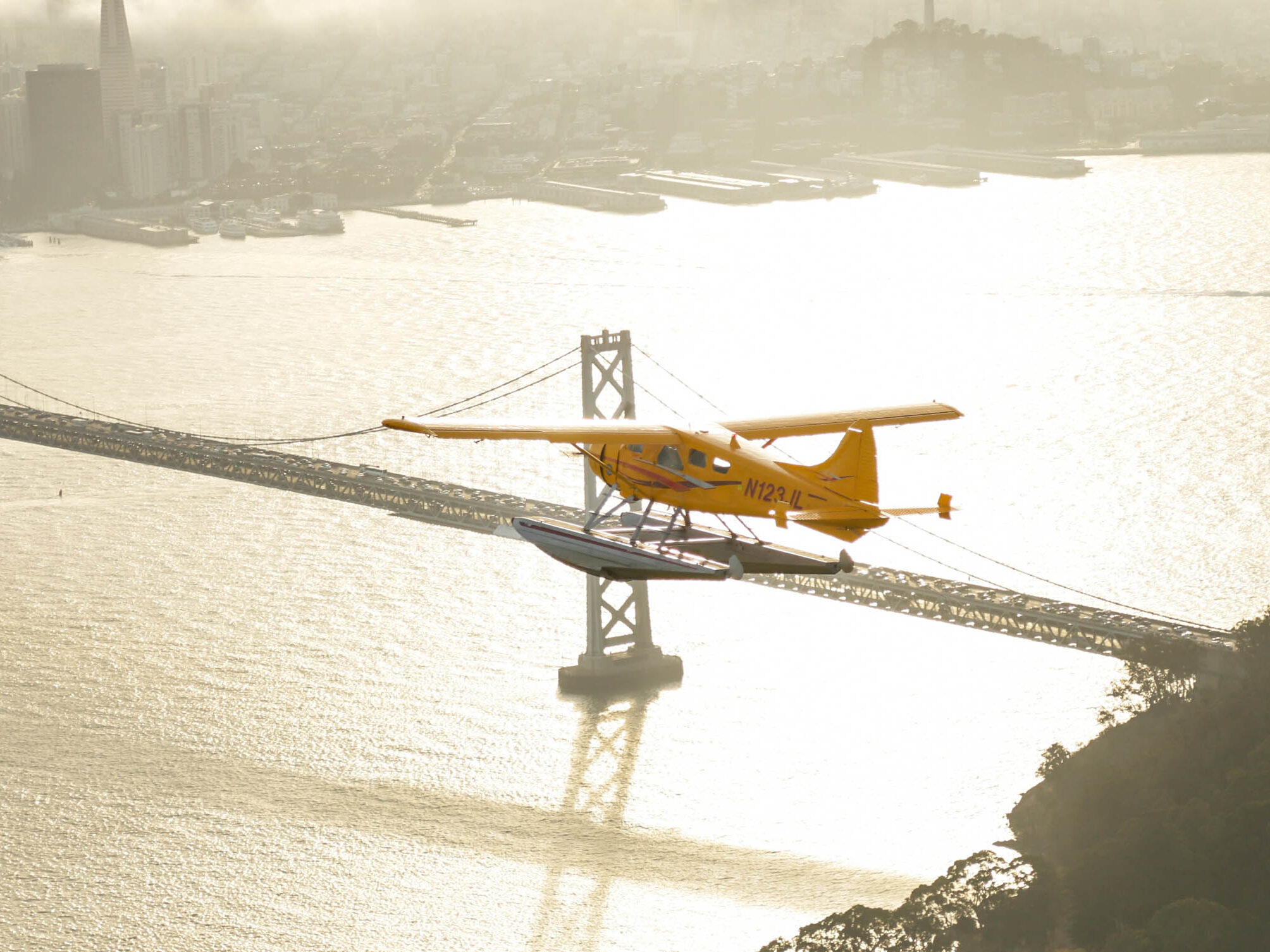
Beyond the novelty, a seaplane tour gives you something a regular sightseeing flight simply can’t: the actual sensation of a water takeoff and landing, right in Richardson Bay, bookending a flight over the Golden Gate Bridge, Alcatraz, and the San Francisco skyline. It’s part boat ride, part flight, and genuinely its own category of experience.
Common Questions, Answered
- Are seaplanes safe? → Yes. They’re certified aircraft, flown by pilots with the same FAA licensing as any other commercial pilot, plus additional training specific to water operations.
- Do seaplane pilots need special training? → They do. Flying on water requires an SES (single-engine sea) rating on top of a standard pilot’s license, plus specific training in reading water conditions and handling a very different kind of takeoff and landing.
- Can seaplanes fly in bad weather? → Like any aircraft, seaplane flights are subject to weather conditions, and routes or timing can shift if conditions call for it.
- Do you need any experience to fly on one as a passenger? → None at all. If you can sit in a regular airplane seat, you’re ready for a seaplane tour.
Ready to See It for Yourself?
Now that you know what a seaplane actually is, the best way to really understand it is to feel that water takeoff for yourself. Every seaplane tour departs from the Mill Valley Seabase, just 10 minutes from the Golden Gate Bridge.
Book your seaplane tour here or call 415-332-4843.