Watching a helicopter lift straight up off the ground, hover in place, then glide sideways over the Bay never quite stops looking like magic. It’s not magic, though. It’s physics, and once you understand how it actually works, it makes the experience even more impressive.
Here’s a real, no-jargon breakdown of how a helicopter flies, and how our pilots put all of it to use on every tour.
The Main Rotor Is Doing All the Work
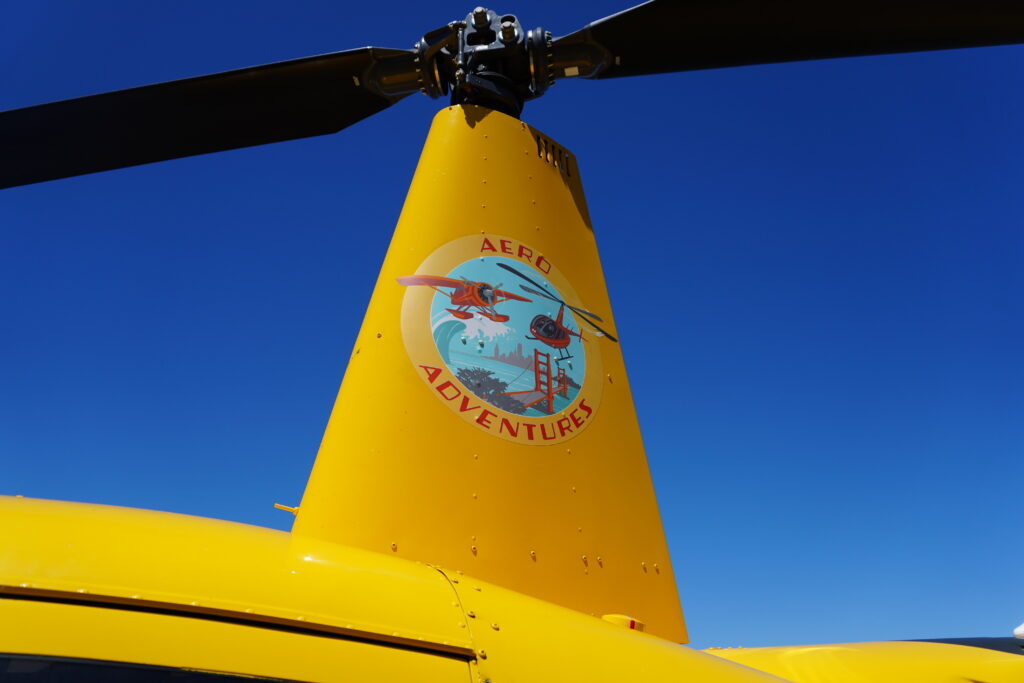
A helicopter’s main rotor blades are really just long, thin wings spinning in a circle. As they spin, air flows over the curved top of each blade faster than underneath it, the same basic principle that lets an airplane wing generate lift. Spin those blades fast enough, and the whole aircraft lifts straight off the ground.
The pitch, or angle, of those blades is what controls how much lift they generate. Flatten the angle, and you get less lift; steepen it, and you get more. That’s the first big control a pilot is constantly adjusting.
Two Controls, One Really Cool Trick
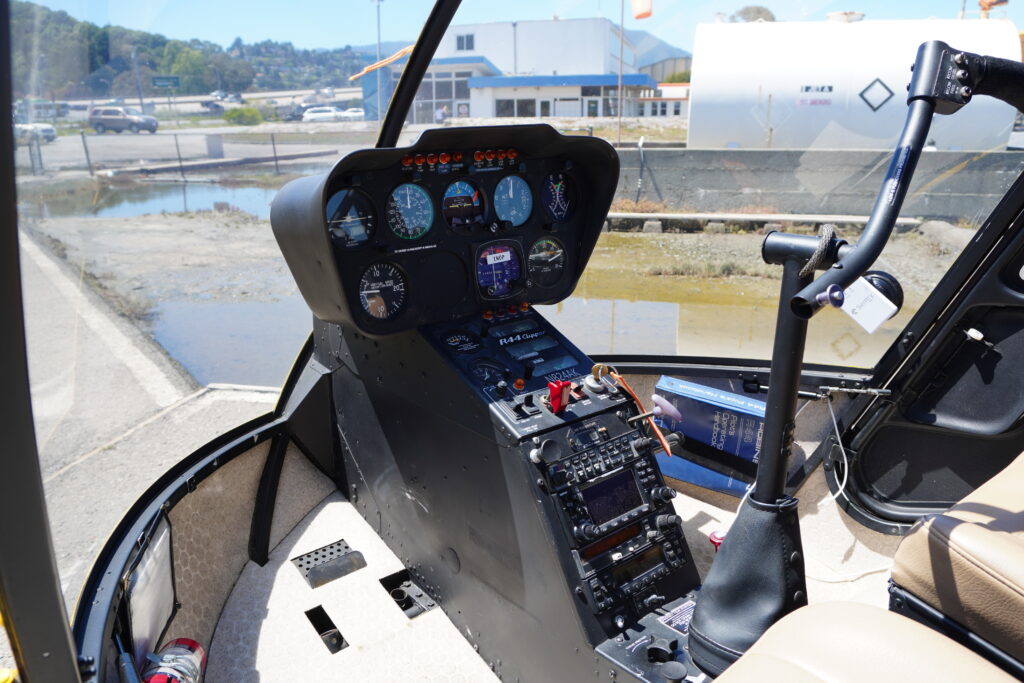
Pilots manage that blade angle with two main controls:
The collective changes the pitch of all the rotor blades at the same time, evenly, all the way around. Pull up on it, and the whole aircraft climbs. Lower it, and the helicopter descends. This is the control that gets you off the ground and back down again.
The cyclic is the cooler one. Instead of changing all the blades equally, it changes the pitch of each blade individually as it spins around the circle, tilting the entire rotor disc in whatever direction the pilot wants to go. Tilt the disc forward, and the helicopter moves forward. Tilt it left, and it drifts left. This is how a helicopter can hover perfectly still one second and glide smoothly toward the Golden Gate Bridge the next.
Why Helicopters Don’t Just Spin in Circles
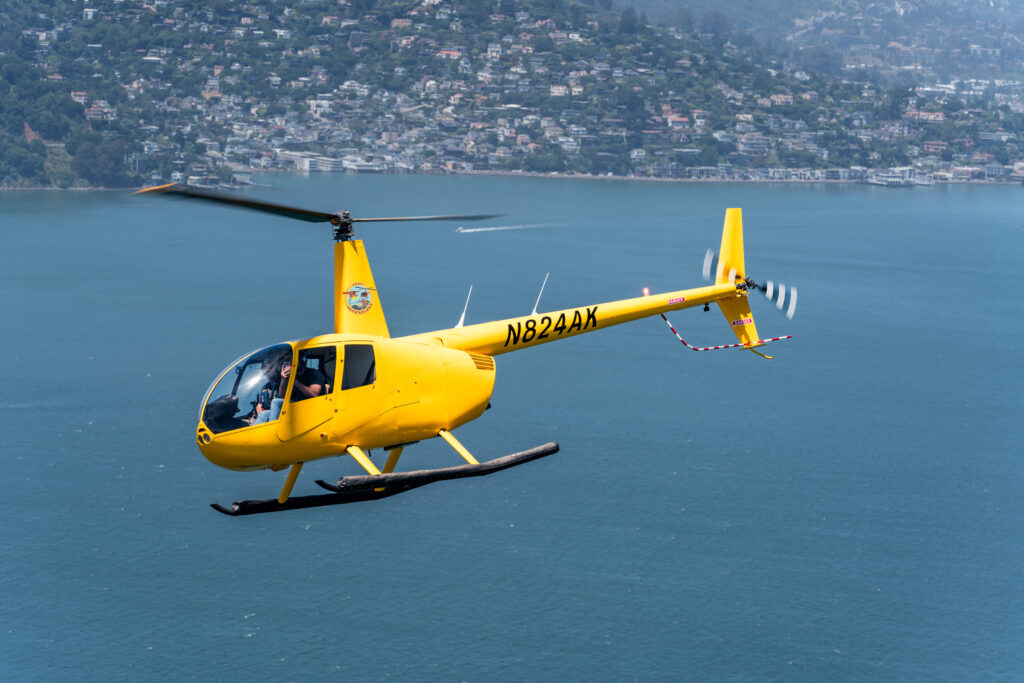
Here’s a problem you might not expect: spinning that big main rotor creates torque, a rotational force that would send the entire helicopter body spinning in the opposite direction if nothing counteracted it. That’s what the tail rotor is for. It pushes air sideways to cancel out that torque, and by adjusting how hard it pushes, the pilot can also control which direction the nose of the helicopter is pointing. That’s the third major control, and it’s the reason a helicopter can point wherever it wants regardless of which direction it’s actually moving.
Hovering Is Harder Than It Looks
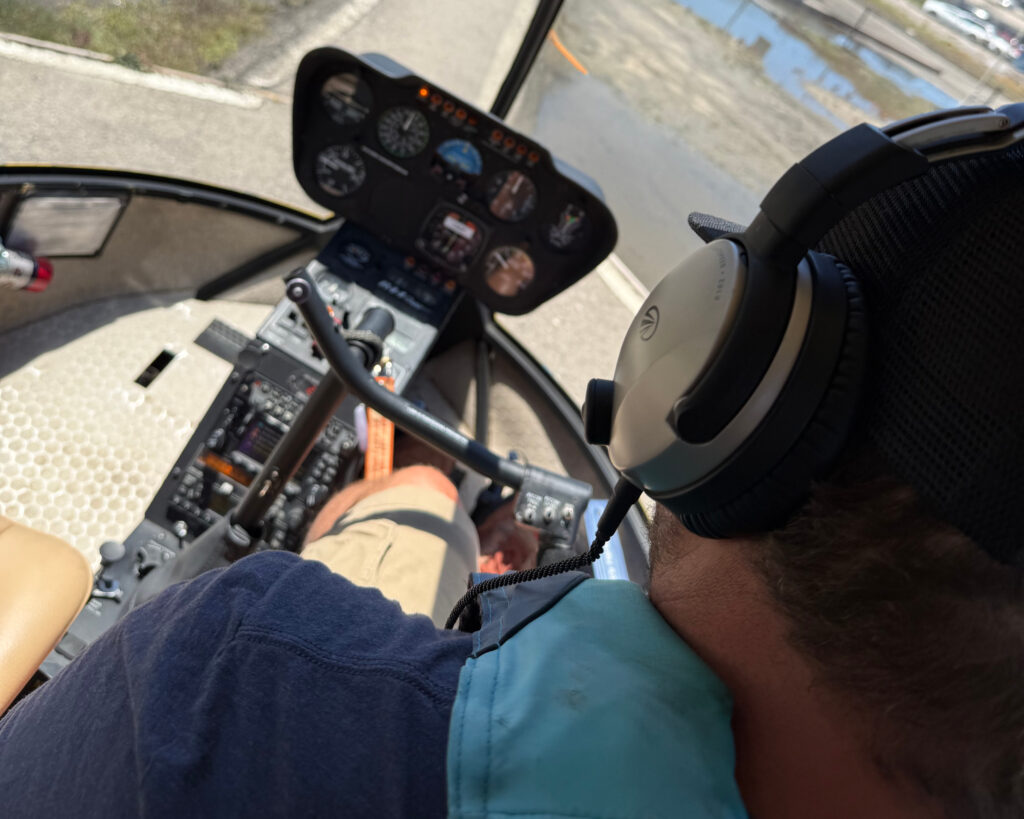
Hovering in place looks effortless from the outside, but it’s actually one of the more demanding skills a pilot develops. It requires constantly balancing all three controls at once (collective, cyclic, and tail rotor pedals), making tiny corrections every second to hold position against wind, air currents, and the helicopter’s own tendencies to drift. Over the Bay, where wind conditions can shift quickly around the Golden Gate and the surrounding hills, that skill matters even more.
The Aircraft Behind the Experience
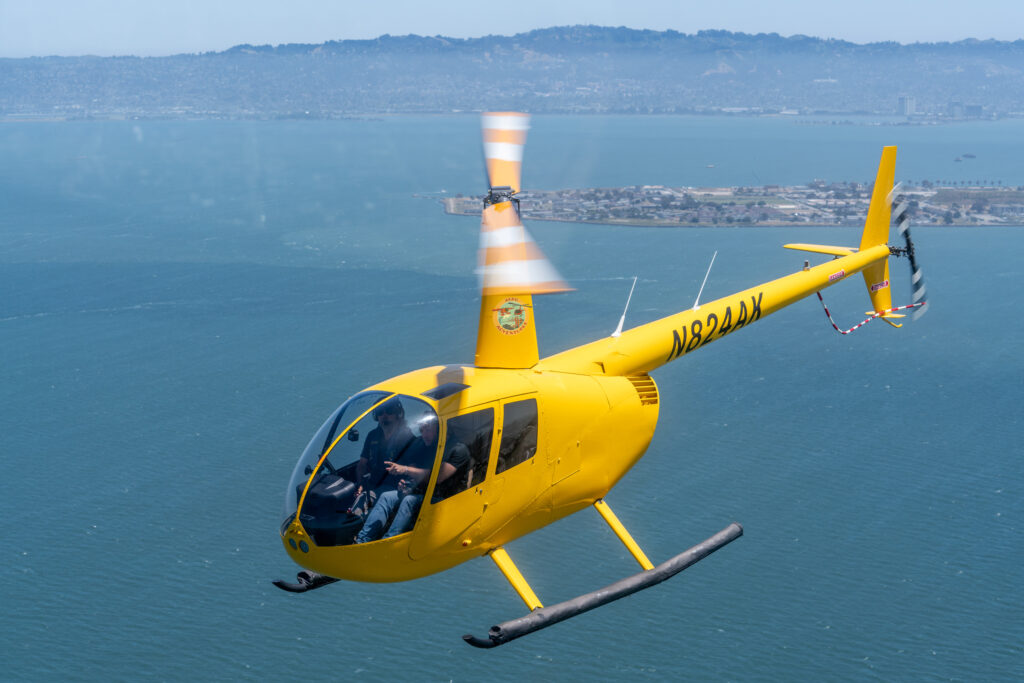
Every tour you take with us flies aboard a Robinson R44, a light, agile helicopter built specifically for exactly this kind of flying: smooth, controlled, and stable, even with the wide bubble windows that give you those unobstructed views of Alcatraz, Angel Island, and the San Francisco skyline. Our pilots have logged thousands of hours in this exact aircraft over this exact stretch of coastline, which is exactly why the flight feels so effortless from where you’re sitting.
What This Means for You

You don’t need to understand rotor aerodynamics to enjoy the flight; that’s the pilot’s job. But now you know what’s actually happening every time your helicopter lifts off, hovers for that perfect photo over Alcatraz, then banks smoothly toward the Golden Gate Bridge. It’s not magic. It’s a genuinely elegant piece of engineering, flown by people who know exactly how to use it.
Ready to See It in Action?
Now that you know how it all works, the best way to really understand it is to feel it for yourself. Every tour departs from the Mill Valley Seabase, just 10 minutes from the Golden Gate Bridge.
Book your aero adventure here or call 415-332-4843.